
An open discussion in an Open School
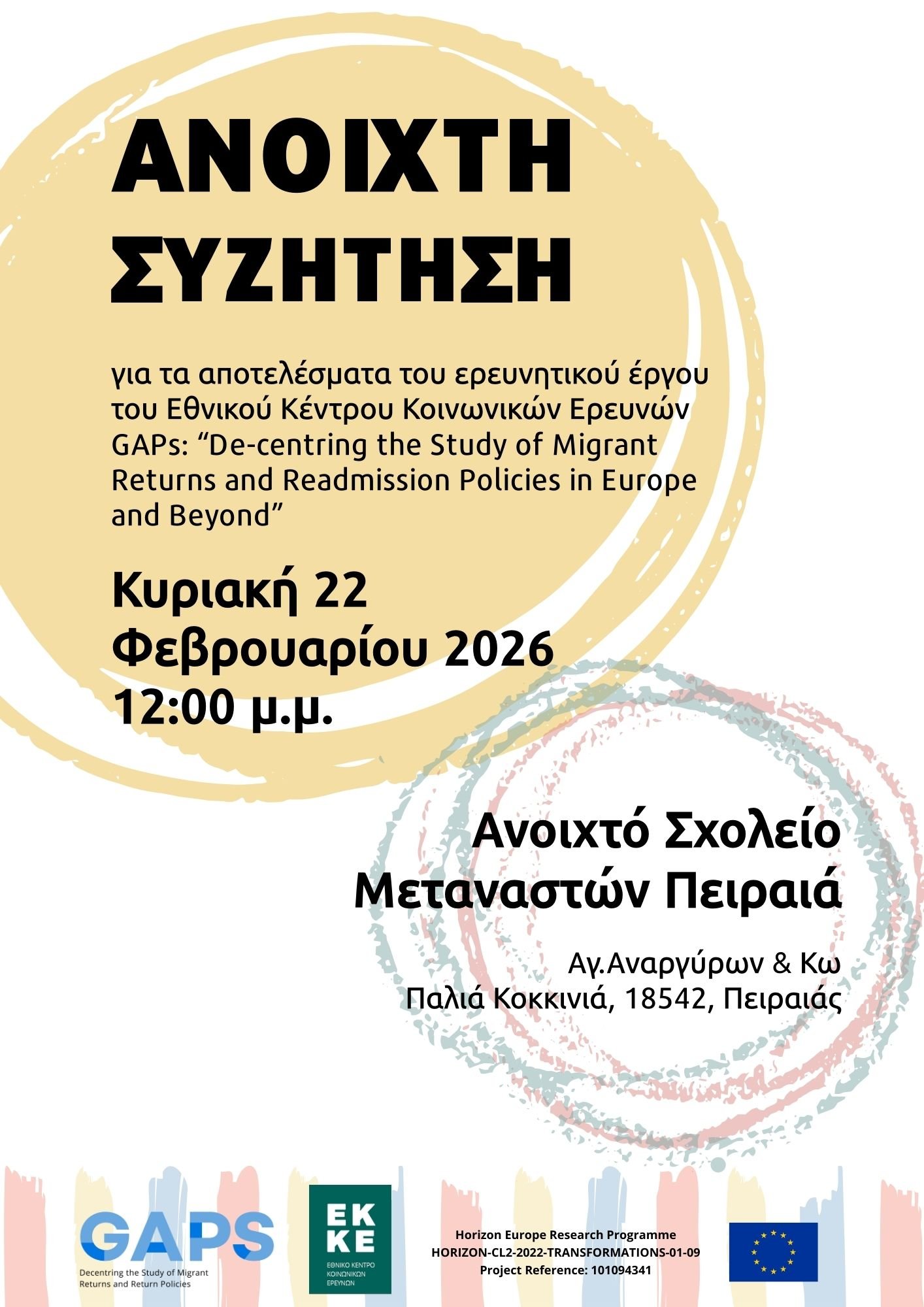
Poster of the public discussion organised by EKKE team.
As the GAPs research programme draws to a close, the ΕΚΚΕ team organised a public discussion to present the project’s findings on Sunday, 22 February, at the Open School for Migrants of Piraeus.
The researchers presented the results of the study in light of a key finding: that the migration‑return policies of the European Union and its member states rely heavily on coercion. Whether through the implementation of formal deportations (let alone informal pushbacks from border zones such as those in Greece) or through the softer forms of pressure embedded in “voluntary” return programmes, the common thread remains the objective to remove as many people as possible from European territory. This removal has become the primary criterion for assessing the “effectiveness” of migration policy, sidelining concerns for the protection of rights as well as the multiple contributions that migration makes to European societies.
The provisions of the forthcoming Return Regulation—such as the possibility of deporting individuals to countries with which they have no prior connection and detaining them in “return hubs” there, the extension of administrative detention to as long as two years, and the further intensification of internal controls within member states—confirm that return policy ultimately functions as a more palatable label for an expansive deportation regime.
During the discussion, which saw strong participation from the volunteer teachers and students of the School, we shared experiences and collectively reflected on the possibilities for challenging these policies. From the perspective of the ΕΚΚΕ research team, it is clear that initiatives and institutions such as the Open School put into practice the values of equal participation, solidarity, and empowerment, counteracting some of the exclusions that migrants face in our societies. We wish to congratulate everyone involved and thank them for their invaluable contribution to our research in Greece.