
Country Profile

GAPs Country Profile: Afghanistan / Blog Posts
by: Shapoor Hamid, BILIM Organization for Research and Social Studies
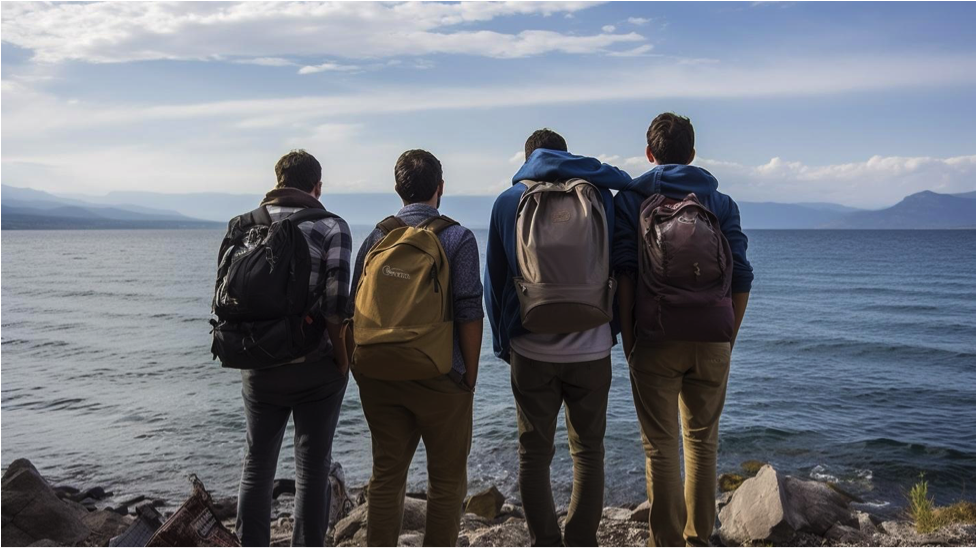
Echoes of Hope: The Continual Pursuit of Migration Among Afghans
In the wake of forced or voluntary return, the aspirations for migration among Afghans remain steadfast, undeterred by the hurdles of the journey back home. Drawing from qualitative in-depth life history interviews conducted by Bilim in Herat, Balkh, Kabul, and Kandahar provinces of Afghanistan, I intend to reflect on a few major themes to uncover the profound desire of returnees to migrate once more. These individuals, grappling with the harsh realities of life in Afghanistan, harbor a fervent longing for the promise of a better future elsewhere—a longing that persists despite their past experiences of migration and return.

The Plight of Afghan Return Migrants from Pakistan
by: Hideyat Siddiqi | BILIM Organization for Research and Social Studies
While strategists, policymakers, and scholars around the world are overwhelmingly concerned about the humanitarian crisis in the Middle East (Israel-Gaza war) and the war in Ukraine, Afghan refugees have once again become a top agenda item for the foreign policies of Pakistan and Afghanistan. Home to the second-largest population of Afghan refugees worldwide (over 4.4 million), Pakistan ordered an ultimatum for forced deportation of 1.7 million undocumented Afghan refugees on November 1, 2023.

Returning to Uncertainty: Navigating Challenges in Post-2021 Afghanistan
by: Hidayet Siddiqi, BILIM | Shapoor Hamid, BILIM
For decades, migration remained a prevailing survival strategy among Afghans, a means to escape conflict and pervasive uncertainty. Currently, the host nations are increasingly advocating for the return of Afghan refugees to their home country as a viable solution. However, the general lack of economic opportunity and geopolitical uncertainty in Afghanistan poses significant challenges to convincing Afghan refugees to consider voluntary return to their homeland…
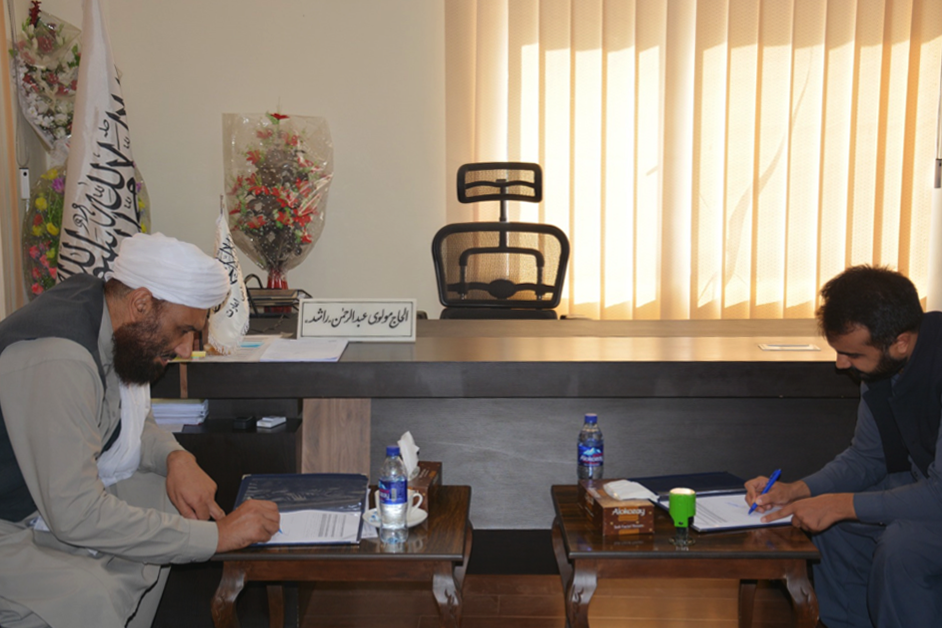
BRC has Signed a Memorandum of Understanding with the Ministry of Refugee and Repatriation, Afghanistan
by: Hidayet Siddiqi, BILIM | Shapoor Hamid, BILIM
Afghanistan ranks among the leading countries producing the highest number of refugees and returnees worldwide. The Soviet invasion of Afghanistan in 1979 and subsequent waves of internal conflicts and violence forced nearly 5 million Afghans to remain forcibly displaced outside Afghanistan. Likewise, each year hundreds of thousands of Afghans are forcibly returned to their country. Established in 1990, the Ministry of Refugee and Repatriation (MoRR) is the highest authority and responsible institution for addressing complexities and challenges associated with refugees and returnees in the country.
To uphold a strong collaboration and cooperation in the areas of migration studies, the BILIM Organization for Social Studies (BRC) has developed a cordial relationship with the ministry. In this context, to secure a strong legal framework…
GAPs Country Profile: Afghanistan / Publications
The WP8 Afghan country survey report presents descriptive findings from a quantitative study of return experiences and conditions among Afghan returnees. A total of 416 individuals were randomly selected and surveyed across four provinces—Kabul, Herat, Mazar-e Sharif, and Kandahar—using a two-stage stratified sampling strategy in which returnee settlements were first randomly chosen and, in a second stage, individual returnees were randomly selected for interviews. The in‑person survey, implemented with SurveyCTO between December 2023 and January 2024, documents socio-demographic profiles, return pathways, reintegration conditions, and future intentions in a rapidly changing return context.
The findings highlight the multi-layered and often precarious nature of return and reintegration, characterised by socio-economic vulnerability, limited access to basic services, and high levels of psychological distress. Although many returnees demonstrate moderate levels of hope and resilience, nearly half report detention abroad and most have returned due to forced deportation or an inability to secure legal residency in host countries, with reintegration further hindered by widespread unemployment, financial hardship, and only limited, largely emergency‑oriented institutional support. In this context, family and religious/spiritual resources emerge as core coping mechanisms, partially compensating for gaps in state and international assistance…

This report explores return migration governance in the African and Middle Eastern regions and the role of the EU by looking at the governance of coerced returns from Turkey, Lebanon, Jordan, and Iraq to Syria; from Morocco, Tunisia, and Libya to Nigeria; and from Iran and Turkey to Afghanistan.
This study is situated in a CONTEXT where the migration management of the African and Middle Eastern host countries under study has increasingly focused on return.
The Islamic Republic of Iran hosts the largest population of Afghan refugees worldwide. However, recent years have seen significant dynamics in both inflow and outflow, highlighting the complexities of return migration governance. While estimates vary, with the United Nations High Commissioner for Refugees (UNHCR) suggesting around 4.5 million Afghans in Iran and the Iranian government indicating over 5 million, the International Organization for Migration (IOM) recorded a substantial out-migration of 8.99 million from Afghanistan to Iran between 2021 and 2023, with 7.97 million returns from Iran and Afghanistan recorded during the same period.
Multiple factors drive this migration pattern, including political upheaval post-regime change in August 2021, socio-economic strains exacerbated by disruptions in international aid, and societal norms impacting women's inclusion in education and employment. Notably, the UNHCR reports a spike in daily crossings from Afghanistan to Iran, jumping from 2,000 to 5,000 between August and September 2021.
Please SIGN UP to get GAPS NEWSLETTERS at the bottom of this page.