
GAPs Final Conference Examines the Future of Return Migration Governance
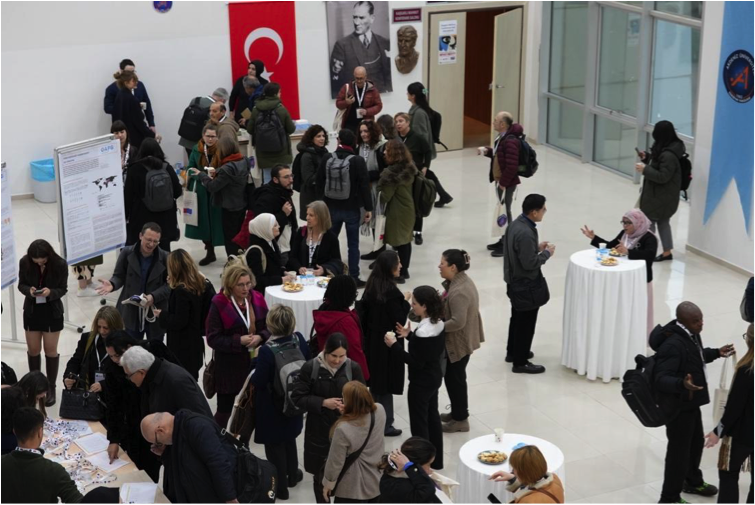
A frame of some participants at GAPs Project Final Conference enterance.
The GAPs Project Final Conference, “Navigating Return Migration: What Next? Diplomacy, Infrastructures, and Pathways Beyond”, took place on 22–23 January 2026 at Akdeniz University in Antalya, Türkiye. The conference brought together scholars, practitioners, and policymakers to critically examine how return migration is governed in an era of geopolitical uncertainty, externalised border regimes, and increasingly non-linear mobility trajectories.
The event was organised by Maissam Nimer (Akdeniz University and Özyeğin University), Susan Rottmann (Özyeğin University), Soner Barthoma (Uppsala University), and Zeynep Şahin-Mencütek (Bonn International Centre for Conflict Studies).
You can find all details of the conference here.
And a short video of the conference here.
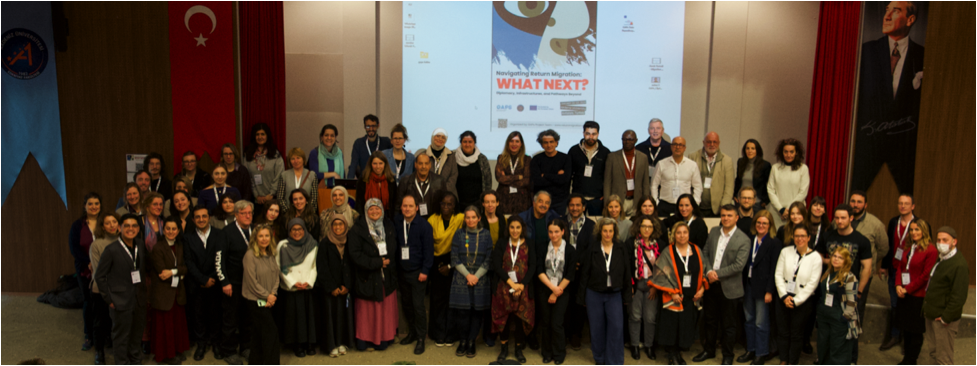
The GAPs Project team in a group photo at the final conference.
Keynote Insights: Rethinking Return, Home, and Belonging
Two keynote lectures set the tone for the conference. Anna Triandafyllidou (Toronto Metropolitan University) explored the growing complexity of contemporary migration, where motivations are mixed, movements are non-linear, and traditional categories such as “voluntary” and “forced” return no longer capture lived realities. Her analytical framework highlighted how coercion, informality, and policy contradictions shape return practices in the Mediterranean region and beyond.
Linda Adhiambo Oucho (African Migration and Development Policy Centre) addressed the emotional and political dimensions of return in her keynote, “East, West, Is Home Truly Best?”. Drawing on African and global perspectives, she showed how return is rarely final or settled, as aspirations, fears of reintegration, and transnational ties continue to shape migrants’ decisions over time.
Panels: From Border Regimes to Everyday Reintegration
Across multiple panels, participants challenged the idea of return as a policy endpoint. Discussions demonstrated how return is mobilised as a tool of state regulation, often operating through blurred lines between “assistance” and coercion, and how externalisation strategies shift responsibility away from powerful states while embedding return governance within geopolitical and economic agendas.
Several panels foregrounded lived experiences of return and reintegration. Researchers highlighted how reintegration unfolds on a fragile spectrum shaped by discrimination, uneven institutional support, community dynamics, and gendered inequalities. Case studies from Africa, the Middle East, Europe, and Asia showed that when reintegration infrastructure lacks legal safeguards, psychosocial support, and coordinated governance, return often leads to renewed precarity or onward migration rather than durable stability.
Other sessions focused on migrants’ agency and aspirations, demonstrating that return is rarely the end of the migration journey. Whether shaped by post-Brexit mobility, social media narratives among Syrian refugees, or long-distance diaspora politics, return emerged as a non-linear and deeply contested process. Historical perspectives on deportation regimes further revealed how contemporary return systems prioritise efficiency and control over protection and justice.
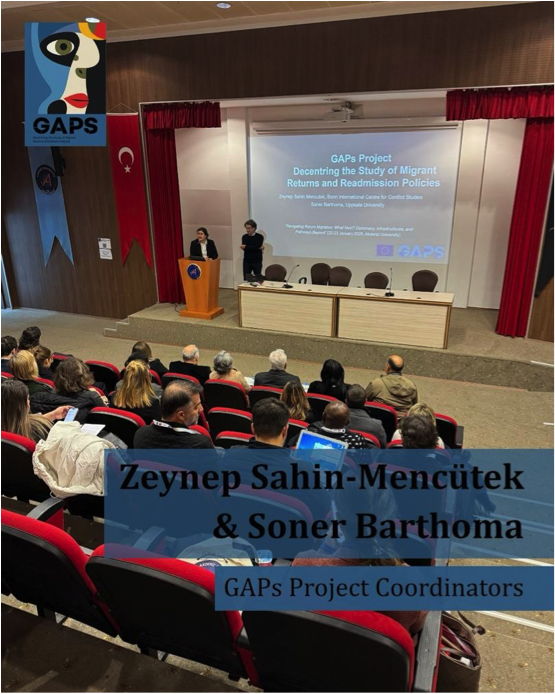
Key Takeaways
Across the conference, four central messages stood out:
● Externalisation obscures responsibility and accountability in return governance.
● Return is rarely final, as mobility aspirations often persist.
● Reintegration outcomes exist on a fragile spectrum, shaped by local dynamics, institutional support, and social networks.
● Gender profoundly structures experiences of (non-)return and reintegration, making “gender-neutral” policies inadequate.
By bringing together critical perspectives on diplomacy, infrastructure, and everyday reintegration, the GAPs Final Conference underscored that return migration is not a single moment or outcome, but an ongoing, negotiated, and deeply political process. The discussions pointed toward the need for more holistic, rights-based, and context-sensitive approaches to return governance, grounded in the lived realities of migrants themselves.
Contact: gaps.return.migration@gmail.com